Enterprise App Builder for Manufacturing Teams
August 13, 2026PUBLISHED INAi Development
 ali
ali 2026-08-13 17:45:00
 0
0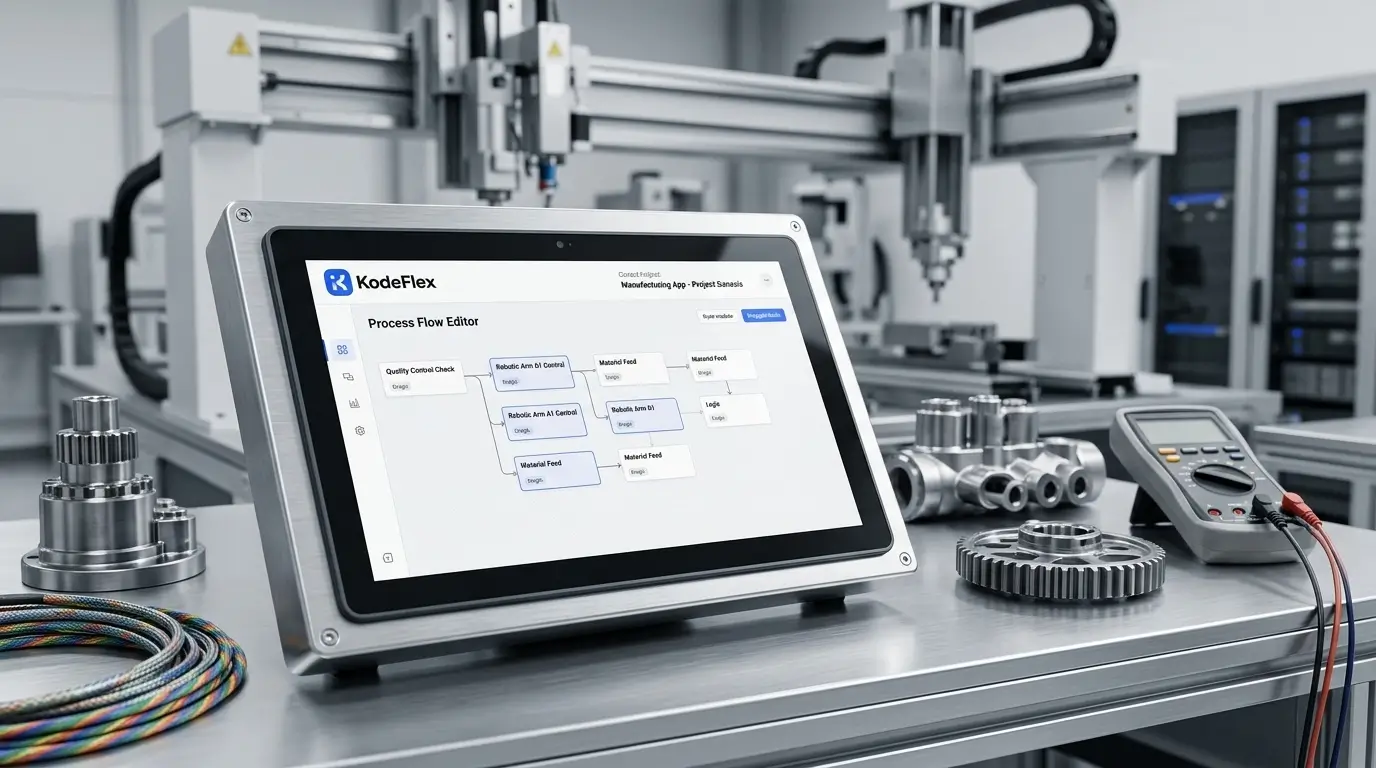
Manufacturing operations generate a steady stream of small, specific tracking needs that don't quite justify a full manufacturing execution system, but are too important to leave on paper or in a shared spreadsheet everyone forgets to update. Equipment downtime logs, quality inspection checklists, maintenance requests, shift handoff notes. None of these need the depth of a dedicated MES, but all of them benefit from being tracked properly instead of informally.
Here's where an AI-native app builder fits into that gap, and where it doesn't.
What Manufacturing Teams Actually Build These Tools For
The recurring patterns tend to be operational rather than deeply technical: equipment maintenance request and tracking, quality inspection checklists tied to a specific batch or line, shift handoff logs so the incoming team knows what happened on the last shift, safety incident reporting, and supply or parts requisition for the floor. None of these require integration with core production systems to be useful, they're the administrative layer around production, not the production control system itself.
Building an Equipment Maintenance Tracker
Describing this to KodeFlex as "a system for logging equipment issues, tracking maintenance requests by machine, and alerting the maintenance team when a request is submitted," generates a working structure: an issue log tied to specific equipment, a request and assignment flow, and status tracking from reported to resolved. Downtime patterns become visible over time, which machine breaks down most often, how long repairs typically take, without anyone maintaining that history manually.
Building a Quality Inspection Checklist App
Quality checks tied to a specific batch, shift, or production run benefit from a structured checklist rather than a paper form that gets filed and forgotten. Building this in means the checklist, the pass/fail criteria for each item, and any required corrective action can all live in one connected flow, with a clear record of who performed the check and when, useful both for internal quality tracking and for audits.
Handling Shift Handoffs Without Losing Context
A shift handoff app, where the outgoing shift logs what happened, open issues, and anything the next shift needs to know, replaces the informal verbal handoff or sticky note that's easy to lose. Building in structured fields, open equipment issues, incomplete tasks, safety notes, ensures nothing depends entirely on two people overlapping in person to pass along context. Use instance management to adjust the handoff template on a staging version as your process evolves, without disrupting the version shift leads are actively using.
Where This Approach Doesn't Fit
This isn't a substitute for core manufacturing execution systems (MES), SCADA, or production line control software, those require specialized, often real-time integration with physical equipment and control systems that a general-purpose app builder isn't designed for. The fit here is the administrative and operational layer around production, tracking, requests, checklists, not the systems directly controlling or monitoring the production line itself.
Frequently Asked Questions
Can this replace our MES?
No. This approach fits administrative and operational tracking around production, not core manufacturing execution or real-time production line control, which need specialized, purpose-built systems.
Can maintenance requests be tied to specific equipment?
Yes, equipment-specific tracking is a standard part of the workflow, making it possible to see patterns like which machines break down most frequently.
Can quality inspection results be tied to a specific batch or production run?
Yes, checklist results can be linked to batch, shift, or run identifiers, which matters for both internal tracking and audit purposes.
How long does it take to build something like a maintenance tracker?
Most teams have a working draft within the same session, with fields and alert logic refined shortly after based on actual shop floor process.
Does this require integration with existing production equipment?
No, these apps operate at the administrative layer and don't require direct integration with production control systems or physical equipment.
Want to map your shop floor's actual tracking needs into a working app?
Request a demo and walk through it together.
Related Blogs
Enterprise App Builder for Healthcare Teams: Workflows That Work