Enterprise App Builder for Logistics and Supply Chain Teams
August 13, 2026PUBLISHED INAi Development
 ali
ali 2026-08-13 18:10:00
 0
0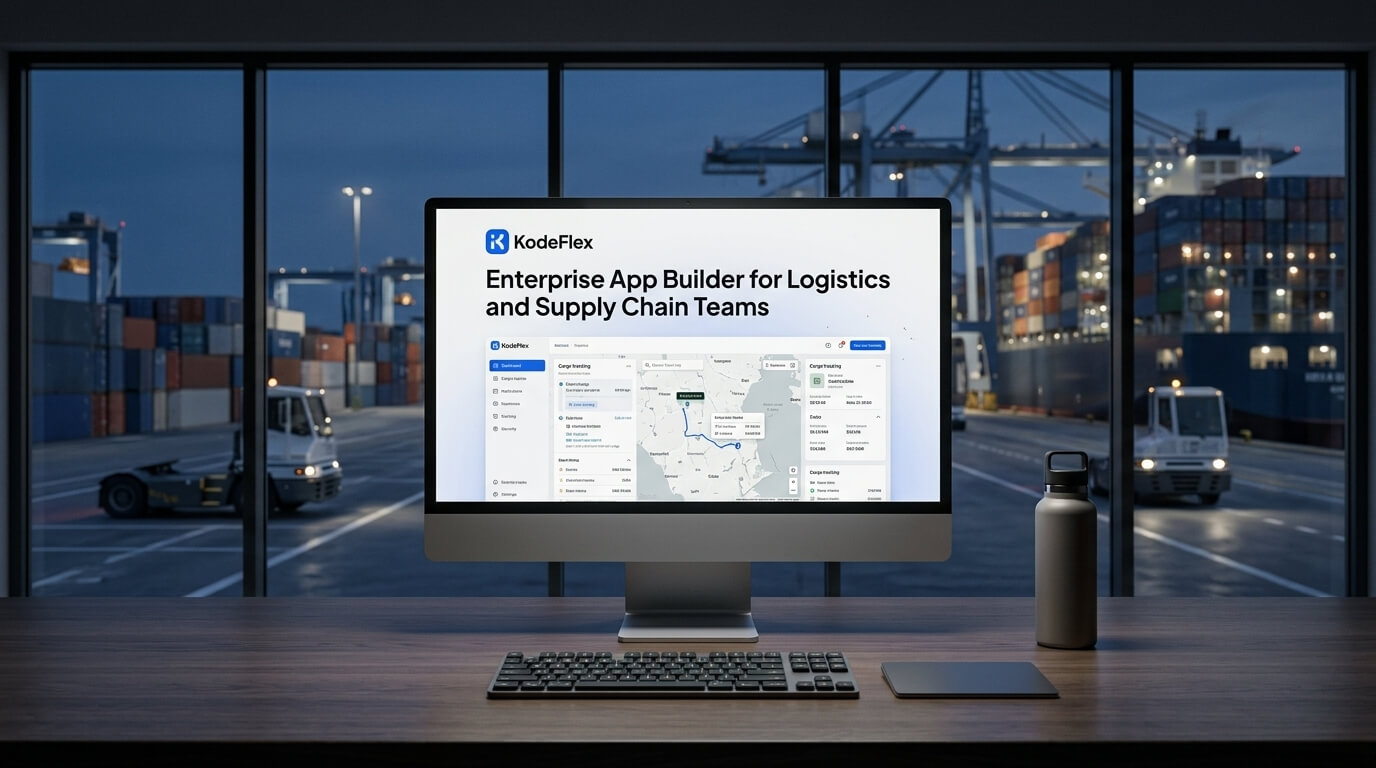
Logistics and supply chain operations run on a mix of core systems, warehouse management, transportation management, ERP, and a surprising number of smaller processes that fall between those systems entirely. Exception handling when a shipment doesn't arrive on schedule, vendor onboarding paperwork, internal transfer requests between warehouses, damaged goods reporting. These gaps tend to get filled with email and spreadsheets, mostly because building a dedicated tool for each one felt like overkill until now.
Here's where an AI-native app builder fits into that picture, and where it doesn't.
What Logistics Teams Actually Build These Tools For
The recurring needs tend to be coordination and exception-handling rather than core transaction processing: shipment exception and delay tracking, vendor and carrier onboarding, internal stock transfer requests between locations, damaged or returned goods reporting, and dock scheduling for inbound and outbound trucks. None of these require replacing a WMS or TMS, they're the connective tissue around those systems, handling the situations that don't fit neatly into standard transaction flows.
Building a Shipment Exception Tracker
Describing this to KodeFlex as "a system where staff log shipment delays or issues, assign them to the right team, and track resolution status," generates a working structure: an exception log, a routing and assignment flow, and status tracking from reported to resolved. Over time, this surfaces patterns, which carriers or routes generate the most exceptions, without anyone manually compiling that history from scattered emails.
Building a Vendor and Carrier Onboarding Flow
Onboarding a new vendor or carrier typically involves collecting documentation (insurance, contracts, compliance certifications), getting internal sign-off, and activating them in whatever systems track approved partners. Structuring this as a guided workflow, with document upload fields and an approval chain, replaces the scattered email thread that usually handles this process and makes it clear at any point exactly what's still outstanding for a given vendor.
Handling Internal Transfer Requests Between Locations
Moving stock between warehouses or locations often needs its own lightweight approval and tracking flow, especially when it crosses cost centers or requires sign-off above a certain value. Building this as a structured request, with an approval step and status tracking, keeps transfers visible rather than relying on a phone call and an informal note in a spreadsheet somewhere. Use instance management to adjust approval thresholds on a staging version as policy changes, without disrupting transfers already in progress on the live system.
Where This Approach Doesn't Fit
This isn't a replacement for core warehouse management, transportation management, or ERP systems, those require deep, often real-time integration with inventory systems, carrier APIs, and financial data that a general-purpose app builder isn't built to replicate. The fit here is the coordination and exception-handling layer around those core systems, not the systems themselves.
Frequently Asked Questions
Can this replace our WMS or TMS?
No. This approach fits coordination and exception tracking around core logistics systems, not the warehouse or transportation management systems themselves, which need specialized, purpose-built platforms.
Can shipment exceptions be routed to the right team automatically?
Yes, routing based on exception type or carrier is standard workflow logic, so issues reach the right team without manual sorting.
Can vendor onboarding require document uploads and approval sign-off?
Yes, document upload fields and multi-step approval chains are a standard part of the workflow, matching how vendor onboarding typically needs to work.
How long does it take to build something like an exception tracker?
Most teams have a working draft within the same session, with routing rules and fields refined shortly after based on actual operational patterns.
Does this integrate with existing WMS or carrier systems?
That depends on your specific setup. These apps are generally designed to fill gaps around core systems rather than requiring deep integration with them.
Want to map your team's actual coordination gaps into a working app?
Request a demo and walk through it together.
Related Blogs
Enterprise App Builder for Manufacturing Teams