Enterprise App Builder for Healthcare Teams: Workflows That Work
August 12, 2026PUBLISHED INAi Development
 ali
ali 2026-08-12 15:06:00
 0
0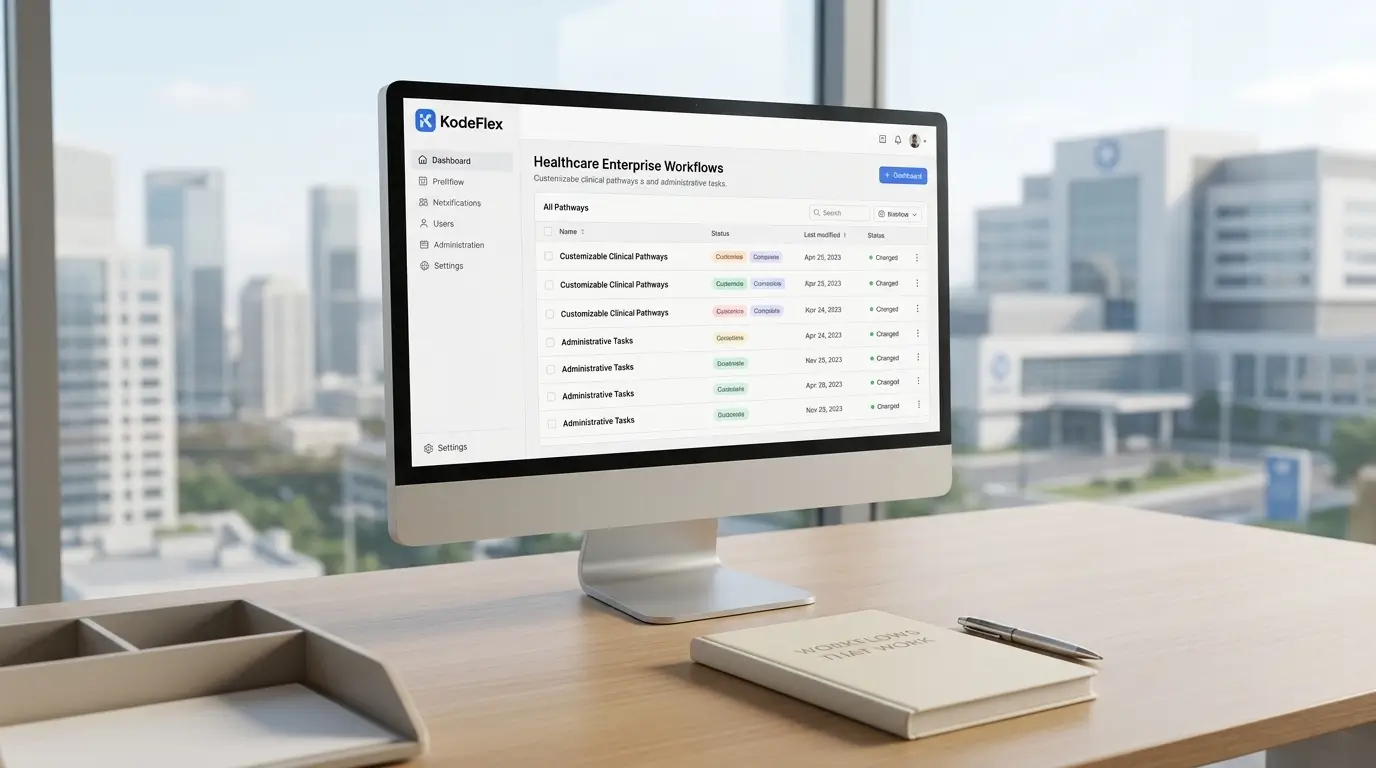
Healthcare organizations run on process almost as much as they run on clinical care, credentialing checklists, equipment tracking, internal request routing, supply approvals. Most of that administrative layer has nothing to do with patient treatment directly, but it still needs to be handled carefully, since healthcare environments carry compliance and data-handling requirements that a generic internal tool built for, say, a marketing team was never designed around.
Here's where an AI-native app builder fits into that picture, and where it genuinely doesn't.
What Healthcare Teams Actually Build These Tools For
The apps that come up most often in this context tend to be operational rather than clinical: staff credentialing and license renewal tracking, equipment maintenance and checkout logs, internal supply requisition, facility maintenance requests, and onboarding checklists for new clinical or administrative hires. None of these directly touch protected health information, but all of them benefit from the same thing every internal workflow does: less time lost to email chains and spreadsheets, more visibility into what's pending and who owns it.
Why Data Control Matters More Here Than in Most Industries
Even administrative workflows in healthcare often touch data that organizations want to keep firmly under their own control, staff records, internal compliance documentation, vendor contracts tied to clinical operations. This is where deployment choice matters more than it would for, say, an internal marketing request form. KodeFlex supports private deployment, which keeps the application and its data inside your own infrastructure rather than a shared public cloud, a meaningful consideration for any healthcare organization evaluating where sensitive operational data actually lives. This is separate from formal compliance certification, which any organization should confirm directly and independently before handling regulated data of any kind.
Building a Credentialing Tracker: A Practical Example
Credentialing is a good example of a process that's simple in concept and painful in practice when it's not tracked properly, every clinician's licenses, certifications, and renewal dates need monitoring, and missing a renewal date has real operational consequences. Describing this to KodeFlex as "a system tracking each staff member's licenses and certifications, with alerts 60 days before any expiration" generates a working structure: a staff record, document fields for each credential, expiration tracking, and automated alerts, built on the workflow engine so nothing depends on someone remembering to check a spreadsheet.
Building an Equipment and Supply Request System
Equipment tracking and supply requisition follow a similar logical pattern to expense approvals in other industries: a request form, an approval step (often tied to department budget or equipment criticality), and a status view. The difference in healthcare is often the added layer of maintenance and compliance logging, tracking when equipment was last serviced or calibrated matters for both operational and regulatory reasons, and building that field into the request flow from the start avoids a separate tracking system entirely.
Where This Approach Doesn't Fit
None of this extends to clinical or patient-facing systems, electronic health records, clinical decision support, patient scheduling tied to treatment, which require specialized healthcare software with the regulatory certifications and clinical safeguards those systems are specifically built around. The use case here is administrative and operational workflows that support healthcare delivery without touching the clinical systems themselves.
Frequently Asked Questions
Can this be used to build patient-facing applications?
No. This approach is suited to internal administrative and operational workflows, not clinical or patient-facing systems, which require specialized, certified healthcare software.
Does private deployment mean the platform is HIPAA compliant?
Private deployment gives an organization control over where application data lives, but formal compliance certification is a separate matter that should be confirmed directly before handling any regulated data.
What kinds of healthcare workflows are a good fit for this?
Administrative and operational processes, credentialing tracking, equipment and supply management, internal approvals, onboarding checklists, tend to be the strongest fit.
Can alerts be set for license and certification expirations?
Yes, expiration tracking with advance alerts is a standard part of the workflow engine, useful for credentialing and any other time-sensitive compliance tracking.
How long does it take to build something like a credentialing tracker?
Most teams have a working draft within the same session, with fields and alert timing refined shortly after based on actual policy.
Want to map your team's specific operational workflow into a working app?
Request a demo and walk through what your team actually needs.
Related Blogs
How to Create a Dashboard App for Your Team